
Rose bushes bring color, fragrance, and elegance to Colorado landscapes, but they require thoughtful care to remain healthy. Knowing how to care for roses properly—including proper watering, seasonal pruning, good airflow, and early pest management—can make the difference between a struggling rose and one that produces beautiful flowers throughout the growing season.
Building a Healthy Rose Bush
Healthy roses begin with the right growing conditions. Most roses perform best when they receive at least six hours of direct sunlight each day. Morning sunlight is especially beneficial because it helps dry moisture from the leaves, reducing the likelihood of fungal diseases.
Roses prefer well-drained soil that contains organic matter. Avoid planting them in low areas where water collects around the roots. In Colorado’s dry climate, roses generally benefit from deep, consistent watering rather than frequent, shallow irrigation.
Water at the base of the plant, allowing the moisture to soak deeply into the soil. Avoid spraying the foliage regularly, particularly in the evening, as leaves that remain wet overnight are more susceptible to disease.
Apply two to three inches of organic mulch around the root zone to:
- Preserve soil moisture
- Moderate soil temperatures
- Reduce weed growth
- Protect roots from Colorado’s temperature swings
Keep mulch several inches away from the stems or crown of the plant. Mulch piled directly against the rose can trap moisture and encourage rot.
Fertilizer should be applied carefully. Too much nitrogen creates excessive soft growth, which can attract pests and may reduce flowering. A balanced rose fertilizer or properly finished compost can be used according to soil conditions and product directions. Avoid fertilizing late in the season, when new growth may not have enough time to harden before freezing weather.
How and When to Prune Roses
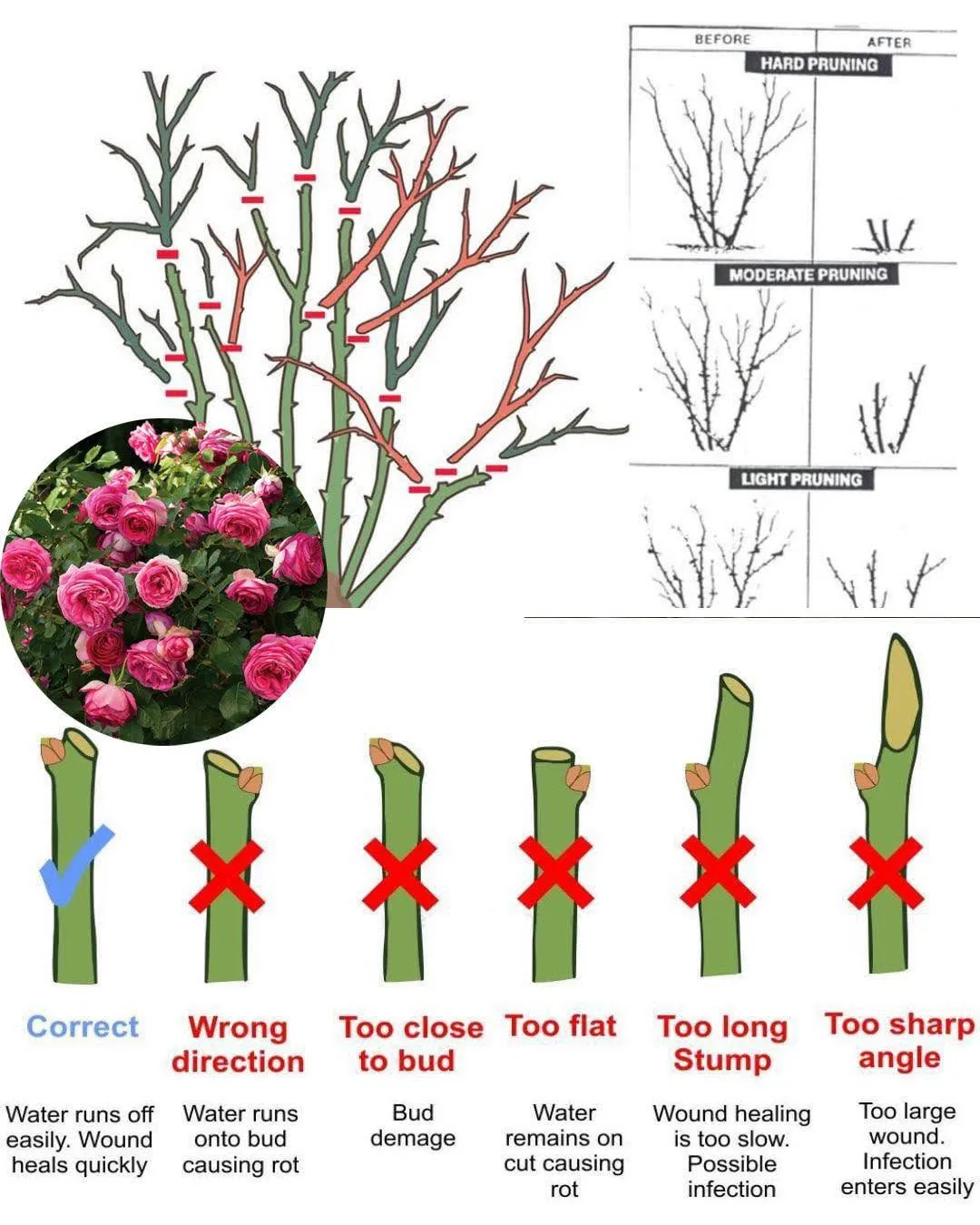
Pruning improves airflow, removes unhealthy wood, encourages flowering, and helps maintain an attractive shape. On Colorado’s Front Range, the primary pruning period is generally early spring, once the risk of extreme cold has passed and the buds begin to swell.
Begin by removing:
- Dead, damaged, or diseased canes
- Thin or weak growth
- Canes that cross or rub against one another
- Growth directed toward the center of the plant
- Winter-damaged stems
- Suckers growing from below the graft or root system
Healthy cane tissue is normally white or light green inside. Continue cutting a damaged cane downward until healthy tissue appears. Remove completely any cane that is brown or hollow throughout.
Use clean, sharp bypass pruners. Make each cut just above a healthy outward-facing bud. This encourages new growth to develop away from the center of the bush, creating a more open structure with better airflow.
Deadheading—removing faded flowers—can encourage many repeat-blooming roses to produce additional flowers. Stop major pruning and deadheading late in the season so the plant can begin preparing for winter.
Once-blooming climbing and old-fashioned roses often flower on older wood. These varieties are normally shaped after flowering so that spring pruning does not remove the season’s flower buds. Always consider the rose variety before performing major pruning.
Recognizing Common Health Problems
When learning how to care for roses, you’ll find that inspecting roses regularly makes problems easier to correct. Watch for:
- Yellowing leaves
- Black or brown leaf spots
- White powdery growth
- Distorted new growth
- Chewed or skeletonized leaves
- Weak flowering
- Dieback along the canes
Remove heavily diseased leaves and fallen debris from beneath the plant. Do not place infected material in a home compost pile unless the composting process reliably reaches temperatures capable of destroying pathogens.
Good spacing, proper irrigation, clean pruning tools, and removal of infected plant material are often more effective over time than relying entirely on treatments.
Dealing With Japanese Beetles
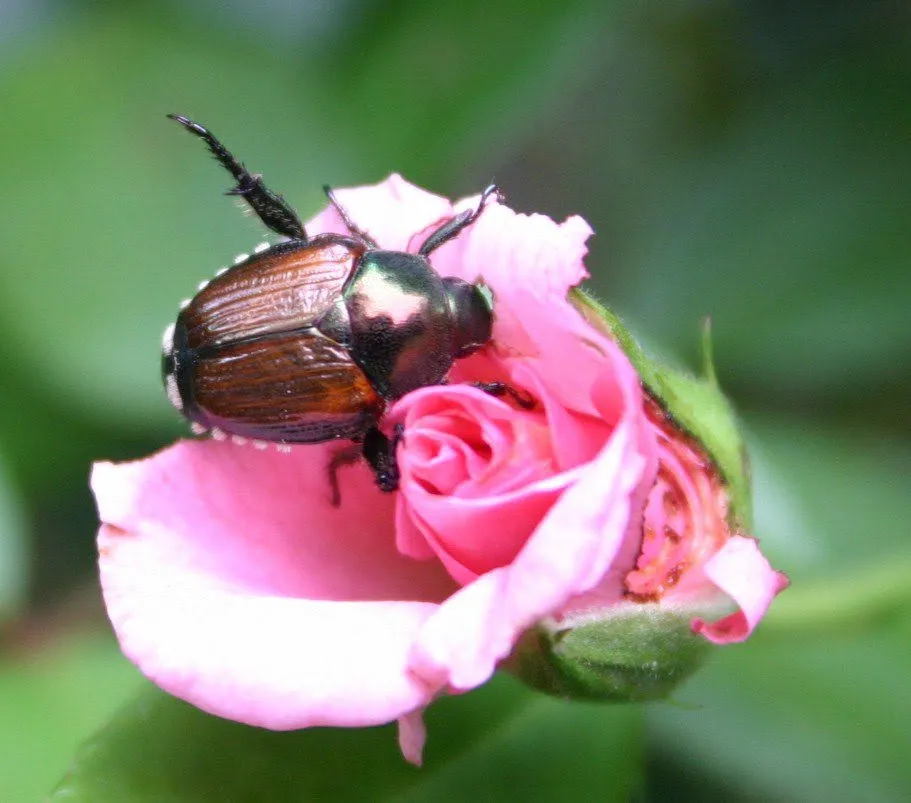
Japanese beetles are metallic green insects with copper-colored wing covers and small patches of white hair along their sides. Adults commonly feed on rose flowers and foliage, leaving behind lace-like or “skeletonized” leaves.
In Colorado, adults typically begin appearing around late June or early July. Their main feeding period lasts approximately six to eight weeks, although timing can vary with weather and location.
Start With Physical Removal
Inspect roses daily when beetles first appear. Early morning is an ideal time because cooler temperatures make the insects slower and easier to collect.
Hold a container of soapy water underneath the affected flower or leaf, then gently shake or brush the beetles into it. Removing them early helps limit feeding damage and may reduce the number of additional beetles attracted to the plant.
Damaged foliage and feeding beetles can attract more beetles, so early action is important.
Avoid Beetle Traps Near Valuable Plants
Japanese beetle traps may catch large numbers of insects, but their lures can attract more beetles into the surrounding area than the traps capture. Placing one near a rose garden may actually increase plant damage. University extension specialists generally do not recommend traps as a way to protect residential landscapes.
Protect Pollinators
Roses and nearby flowering plants may be visited by bees and other beneficial insects. Broad-spectrum insecticides can kill these pollinators along with the beetles.
Before applying any product:
- Confirm that Japanese beetles are causing the damage.
- Read and follow the entire pesticide label.
- Never apply a product in a way that conflicts with its label.
- Avoid treating open flowers whenever possible.
- Do not spray while bees are actively visiting.
- Begin with hand-removal and other nonchemical methods.
Systemic products and long-lasting foliar sprays can present pollinator risks. If an infestation becomes severe, consult a qualified landscape professional or Colorado State University Extension for a treatment appropriate to the plant, site, and stage of the infestation.
What About Treating the Lawn?
Japanese beetle larvae develop as white grubs in turfgrass. Treating grubs may be appropriate when an actual lawn infestation is confirmed, but it will not immediately stop adult beetles flying in from neighboring properties.
Certain beneficial nematodes can suppress Japanese beetle grubs when the correct species is applied under suitable soil and watering conditions. Preventive grub treatments must also be timed to target young larvae. Random or poorly timed lawn applications provide limited benefit and may unnecessarily affect other organisms.
A Practical Rose-Care Routine
For healthier roses throughout the season:
- Prune damaged and crowded growth in early spring.
- Water deeply at the base of the plant.
- Maintain a two- to three-inch mulch layer.
- Inspect foliage and flowers at least once a week.
- Remove diseased leaves and faded flowers.
- Begin hand-picking Japanese beetles as soon as they appear.
- Use pesticides only when necessary and with careful attention to pollinator safety.
With consistent care and early intervention, understanding how to care for roses can help rose bushes tolerate occasional pest damage while continuing to grow vigorously and produce beautiful flowers year after year.